

Imagine a business owner walks into your mixer, collects a name tag, and scans the room. Three groups stand in tight circles. The chamber president is talking with a sponsor. Someone points toward the refreshments.
Ten minutes later, that business owner has checked email, eaten a cracker (it’s hard to eat and network), and began calculating how soon they can leave without looking rude.
Meanwhile, your team thinks the event is going well. People showed up. The food arrived. The microphone works.
But the member has already decided their time is worth more.
That’s a shame.
You spend a lot of time planning what happens during an event. The arrival experience often gets whatever attention remains. Yet those opening minutes help attendees decide whether they belong, whether they’ll meet someone useful, and whether coming was worth leaving their business.
Improving that experience doesn’t require an event app, elaborate décor, or a larger staff. Instead, you need a simple plan for moving people from the doorway into participation.
Start Before They Reach the Door
An attendee’s first ten minutes go more smoothly when they know what to expect before arriving.
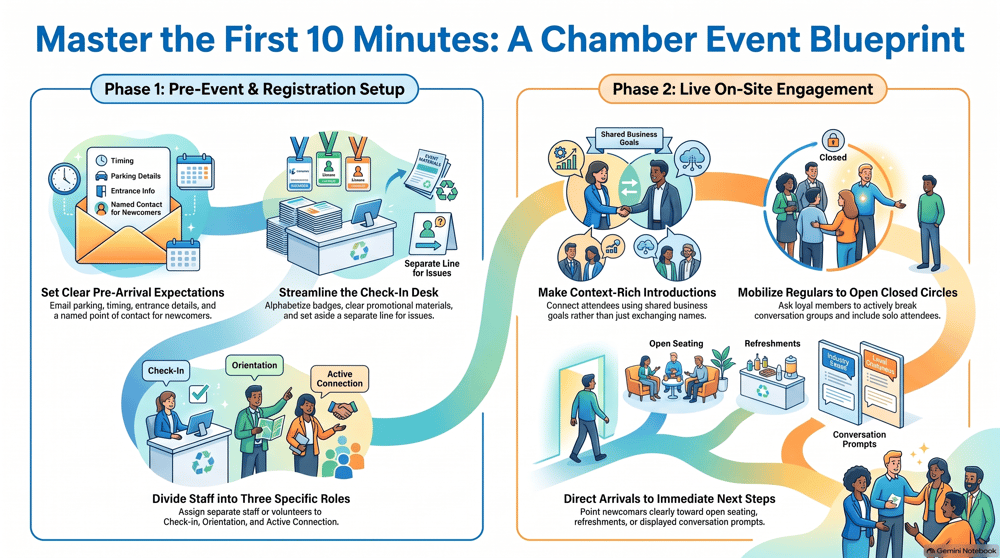
Add a few practical details to your reminder email: where to park, which entrance to use, what time the program begins, and what happens beforehand. If registration opens at 5:00 and remarks begin at 5:30, explain that the opening half hour includes informal introductions.
If the event is happening in a public space or a restaurant/bar that is not exclusively yours for the time, make sure attendees know where to go and how to find your group.
For someone attending alone, offer a specific point of contact: “Coming to your first chamber event? Ask for Denise at check-in. She’ll help you meet a few people.” Make sure Denise knows about this assignment.
You can also invite attendees to reply with one person or type of business they’d like to meet. Review those requests before the event and identify a few possible connections. Even two successful introductions can give attendees a concrete reason to return.
Audio Summary
Give the Welcome Person a Job Description
“Please help welcome people” sounds straightforward. In practice, volunteers may interpret it as smiling near the registration table. Give them something more specific to do.
For a small mixer, divide the opening responsibilities into three functions: check people in, orient them, and introduce them. One staff member and one volunteer can cover all three. At a larger gathering, assign separate people.
The check-in person handles names and registration. The welcome person explains what happens next.
The connector helps attendees enter conversations. They should:
• Watch for people standing alone or hovering near the entrance.
• Ask whether they know anyone in the room.
• Offer an introduction and walk with them.
• Stay long enough to help the conversation begin.
Avoid assigning your only connector to photography, raffle sales, and sponsor assistance, too. Those tasks will quickly swallow the welcome assignment.
If you run the chamber alone, recruit one dependable member for a defined fifteen-minute shift. A small, clear commitment is easier to fill than an open-ended request to “help with the event.”
Remove the Check-In Bottleneck
A slow registration table can consume the very minutes you want attendees to spend connecting. Prepare whatever you can in advance. Alphabetize name tags. Keep blank tags and thick markers within reach. Have a printed attendee list available if your technology fails.
Create a simple way to handle exceptions without stopping everyone else. A person with a missing registration, payment question, or complicated membership inquiry can step to the side while you help the next arrival. Have someone dedicated on hand to take care of these situations without clogging the line.
Move brochures, promotional materials, and lengthy conversations away from the check-in area. People need room to enter, collect their information, and move forward.
Then physically test the setup. Walk through the entrance carrying a bag and imagine several people arriving together. Can they see the table? Read the sign? Reach their name tags?
A five-minute walkthrough can reveal problems you’ve stopped noticing.
Help People Take the Next Step
“Make yourself comfortable” leaves attendees with a decision they may feel poorly equipped to make.
Instead, give them a useful next step: “Coffee is along the back wall. We’ll begin at 8:15. Before you grab a seat, would you like to meet another business owner?”
At a luncheon, show people where open seats are available. At a ribbon cutting, explain where attendees should gather and when the ceremony starts. At a workshop, point out materials and tell arrivals whether they can choose any seat.
Use one visible sign to answer the most common question. A sheet of paper in a reusable frame can say, “Check in here, then join us in the courtyard.”
Keep directions short. People standing in a doorway don’t need the chamber’s entire calendar.
Make Introductions That Can Become Conversations
“Alex, meet Jordan” transfers names. It gives neither person much help with what to say next.
Add a reason for the connection. “Alex runs a small retail shop and is hiring for the holidays. Jordan, you mentioned your team recently changed its hiring process. I thought you might have something useful to compare.”
That introduction gives both people an opening without promising a sale or asking anyone to provide free consulting.
You don’t need an extensive matching system. Before the event, scan the registration list for a few shared interests: expanding a business, managing employees, reaching local customers, or getting involved in community projects.
Don’t abandon two people immediately after saying their names. Offer a starter question or topic, let them respond, and leave once the conversation has somewhere to go.
Ask Regulars to Open the Circle
Your most loyal attendees may accidentally create your biggest welcome obstacle. They know each other. They have plenty to discuss. Their comfortable conversation can look like a closed club to someone arriving alone.
Recruit two or three regulars before the event and give them a manageable request: “For the first ten minutes, could you help us bring people into conversations? We’re especially watching for anyone attending alone.”
Ask them to leave physical space in their group, acknowledge people nearby, and invite someone in with a question. Most regulars happily help if they understand what you need.
Rotate this responsibility so the same generous members don’t become permanent unpaid hosts. They came to build relationships, too.
Use One Easy Conversation Prompt
A thoughtful prompt can help people move beyond the familiar exchange of names, businesses, and weather reports.
Try a question attendees can answer without preparation:
• What’s one thing you’re trying to make easier in your business?
• What local resource do you wish more people knew about?
• What kind of introduction would help you this month?
• What’s a customer question you hear all the time?
Print one question on table cards or display it near the refreshments. Volunteers can use it during introductions.
Choose a prompt that fits the event. At an advocacy gathering, ask which local issue most affects attendees’ daily operations. At a business workshop, ask what they hope to put into practice.
Keep participation optional. You don’t want it to feel like another assignment or a chore. A good prompt gives people something to discuss while allowing the conversation to develop naturally.
Set Up the Room for Joining
You can improve interaction by moving furniture you already have. Keep the entrance clear. Place refreshments far enough inside the room to draw people forward. Leave accessible routes between tables and gathering areas.
Provide some seating for people who can’t comfortably stand through a mixer. If the venue permits, create a quieter place where attendees can hear each other.
Watch where your team gathers. Three chamber representatives talking behind the registration table may look busy and unavailable, even if they’re discussing dinner plans.
At seated events, ask a willing regular to host a table and help people introduce themselves. Avoid steering every newcomer toward one designated “new member table.” They need connections throughout the membership.
Room setup should make joining a conversation easier, including for attendees who move, hear, or participate differently.
Protect the Opening Minutes
The beginning of an event can attract every unfinished task. A sponsor wants a photo. Someone needs an extension cord. A board member has a question. The emcee wants to confirm the agenda.
Complete a brief readiness check before doors open. Confirm the equipment, remarks, signs, supplies, and volunteer assignments. Decide who handles operational problems during arrivals. Then protect the welcome role for those opening minutes.
As a CEO or executive director, you don’t have to greet everyone personally. A prepared ambassador or member volunteer can do this well. You just need someone to own the responsibility and remain available.
For formal programs, announce the start time accurately and honor it. Everyone is busy and you don’t want to build a reputation as “never starting on time.”
Check Whether People Connected
The attendance number tells you how many people came. It doesn’t tell you what happened after they arrived.
Post event, ask your welcome volunteers two questions: Where did people get stuck? Who seemed to have trouble joining in?
Add one specific question to your follow-up message:
“Did you meet someone you’d like to speak with again?”
Check in with a first-time attendee on their experience. Their answer may reveal a parking problem, confusing entrance, or social hurdle your regulars don’t experience.
Choose one improvement for the next event. Keep what works and drop anything that creates extra effort without helping attendees.
Before your next gathering, put a name beside the welcome assignment and ask that person to arrive fifteen minutes early. Give them the attendee list, a few introduction ideas, and permission to focus on people entering the room.
A shaky, unwelcoming first ten minutes is hard to turn around so get the beginning right and it will flavor the rest of the event for the better.
Share this post...
Most Recent Posts

Use year-end appreciation conversations to learn what members found useful, what surprised them, and what they want more of.

They're not all winning "Business of the Year but that doesn't mean they don't deserve your appreciation.

Engaging chamber members in the middle years is easier than you think.

You see the perfect partnership, make the introduction, then nothing. Here's how to fix that.

Create or modify your chamber's policies and procedures doc easily with AI
Your board has lots of ideas but they're not always great. Here's what to do when they aren't.

Holidays are crazy so is the job of a chamber pro. Here's how to navigate both.

What if a board member asks to start posting to the chamber?

Short on time to plan a chamber celebration? These ideas will help you spotlight members, involve your board, and showcase useful benefits in just 1-2 days.

Do people use your member directory? Learn how to get them more involved.
The first ten minutes are the most important part of your event. Here's how to make them better.
To attend or not to attend? That's the question that chamber pros ring in on.
CONTENT
Legal Agreements, Privacy Policy, Terms and Conditions
Copyright 2026 Chamber Pros Community and Frank J. Kenny, LLC